

Market Snapshot: February 2026
Summary
Mixed results
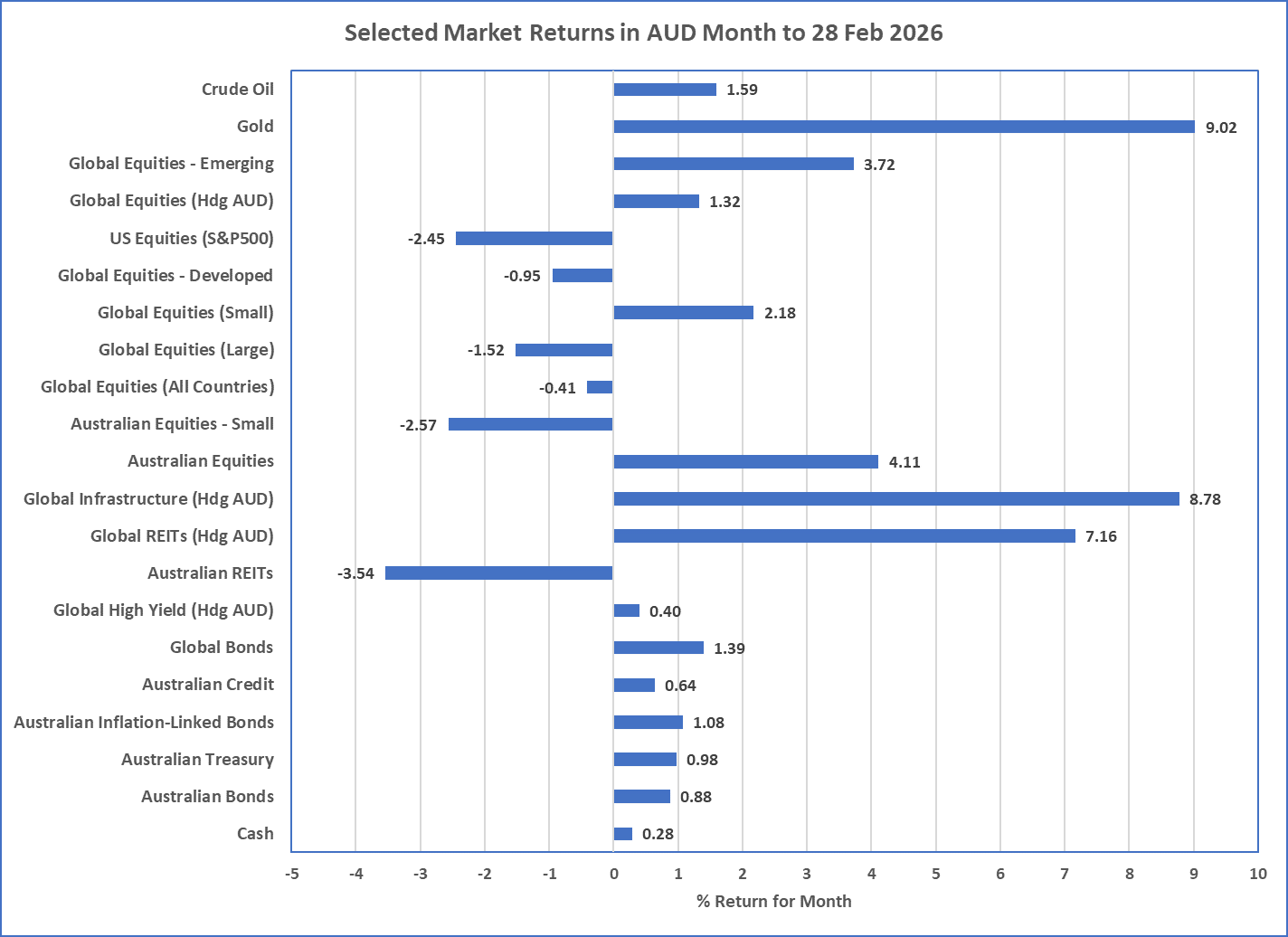
- February was a mixed month for investment markets with the best returns coming from Global Real Assets, including Global Property, Infrastructure, Gold, and Australian shares (a commodity exporting market).
- The US economy has numerous uncertainties thanks to the Iran War, and it’s almost forgotten that the Supreme Court finally ruled many of Trump’s tariffs illegal. Trump has responded by implementing 10% tariffs using a different law but without Congress approval this strategy, which is economically weak and unpopular, will hopefully disappear later this year after the latest batch expires in 150 days.
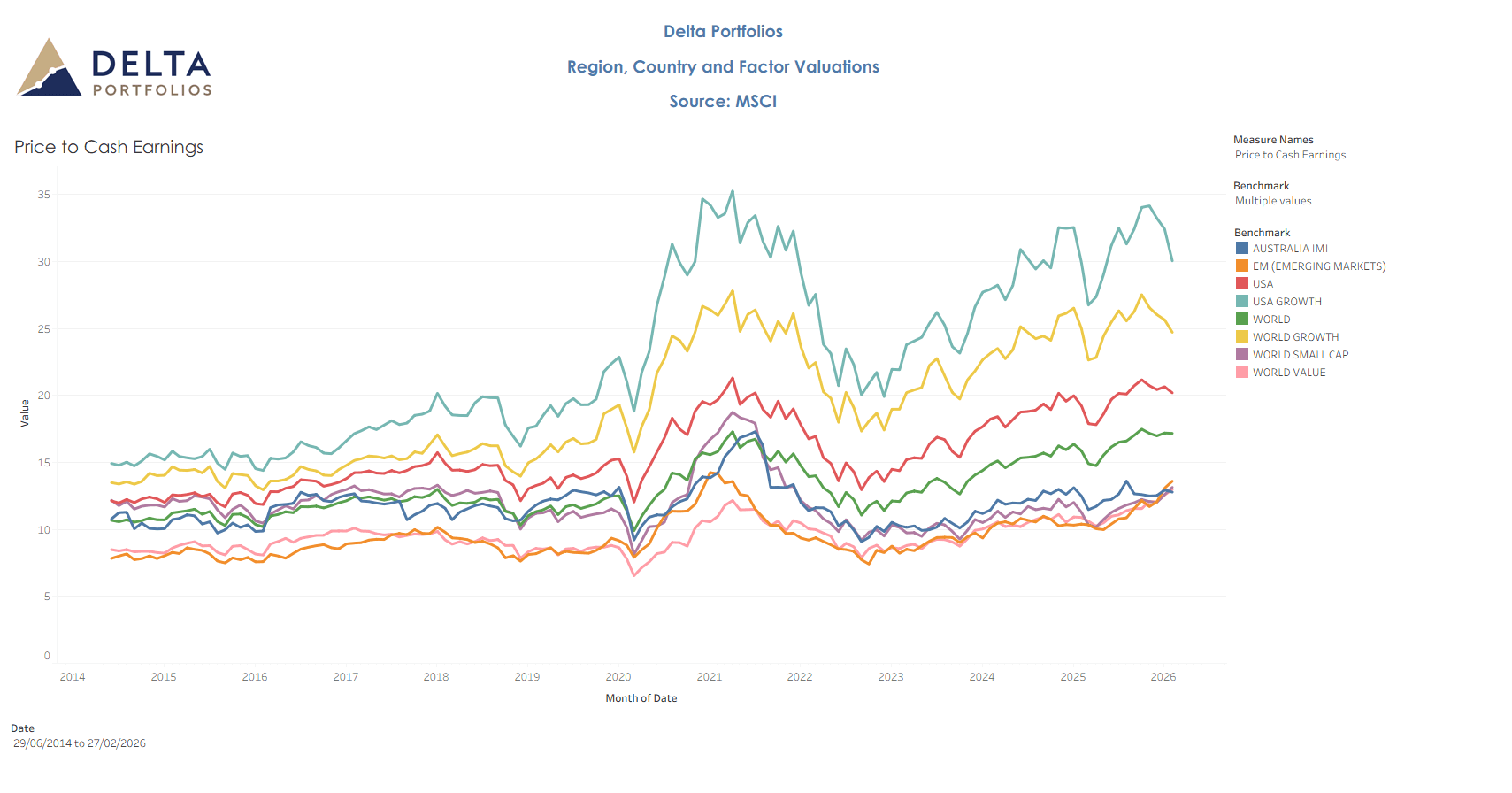
- Our core investment message remains despite persistent tail risks from high sharemarket valuation in USA and the current war(s). This means disciplined risk management rather than aggressive positioning changes. Shares continue to offer an attractive risk premium in specific markets, as do conservative bonds, but returns may be challenged from short term volatility. Avoiding panic (selling) decisions is a crucial investment issue today.
Chart 1 … Good returns for Global Real Assets (& Aust Shares)
Source: Morningstar
What happened last month?
Markets & Economy … Broadening gains and shifting expectations
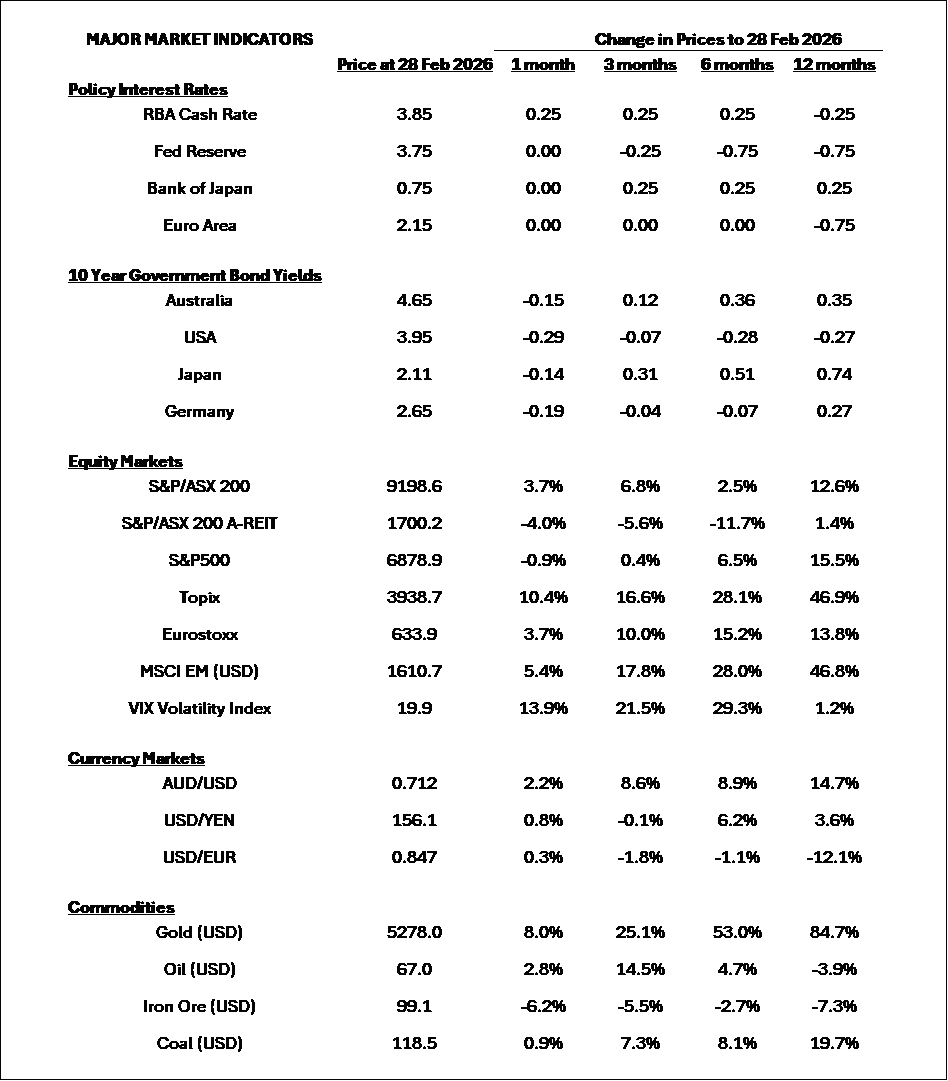
- USA showed continued disinflation with headline and core CPI around 2.5%. This resulted in a reduction in short-term inflation expectations whilst longer-term inflation expectations remained stubbornly high.
- Only Australia’s central bank, Reserve Bank of Australia, changed interest rates in 2026 with a 25bps increase to 3.85% as inflation remains above their target range (3.8% vs 2%-3%). The European Central Bank and Bank of Japan kept rates steady.
- As Chart 1 shows, major asset class returns were mixed in February with the strongest coming from global real assets, Global Property (REITs), Global Infrastructure, Gold, and Australian Equities (a seller of commodities). Weakest returns, came from another real asset, Australian REITs, but this was mostly due to the increase in cash rates by the RBA. Australian Small Companies, and US equities, were also down with the latter weak due to a declining US Dollar against the Aussie.
- Bond markets all produced returns around 1% in February which is a strong result. High Yield the weakest as these risky assets declined in price a little due to some private credit defaults in the USA.
Outlook … Jumping to March … it’s about the Iran War
- Whilst this update is supposed to be about February, it’s safe to say February seems like a long time ago as the Iran War is top of everyone’s mind. Oil prices have climbed over 40% and volatility has been high across all markets whether sharemarkets, commodity markets or bond markets.
- A persistent war is rarely good for affected economies and in this case the impact comes from high oil prices which serve like a tax on everyone … businesses, households, and governments. Whilst many believe the current war will be a relatively short one, the volatility is present and may continue for a little while and inflation may also produce a short term spike.
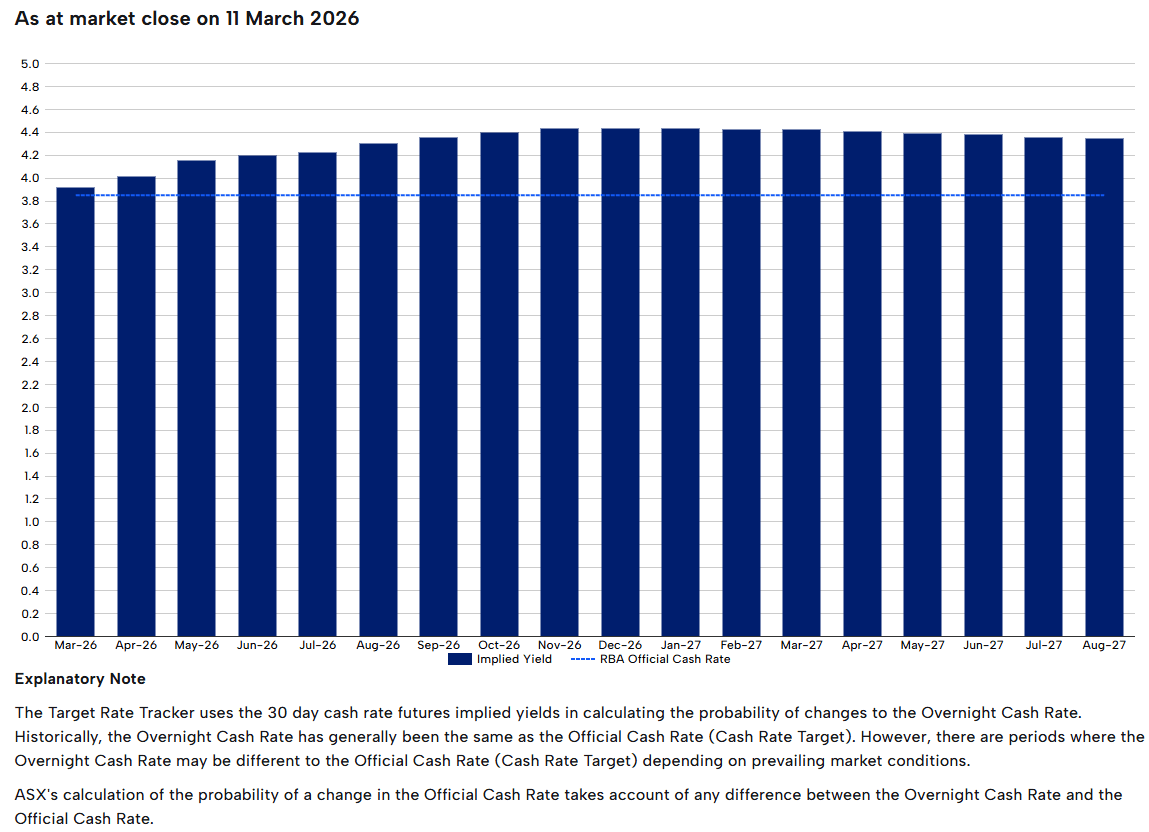
- If the war persists, to combat higher oil prices, central banks may change direction from inflation concerns where they would increase cash rates, to economic concerns, where they might decrease cash rates. This is not the case in Australia yet, as expectations have shifted to continued higher cash rates. However, in the USA there currently appears little sign of a change and in Europe and Japan.
- For now, sharemarkets are likely to be volatile as different markets navigate their different energy supply needs. Either way, sticking to the long-term plan is essential and panicking by selling to time markets should be avoided.
- Diversification continues to be essential. Maintaining a balance between domestic and global exposures remains a prudent approach as 2026 unfolds. Entering new investment positions are best approached using a dollar-cost averaging approach and rebalancing as pricing opportunities arise continues to be appropriate for established portfolios.
Major Market Indicators
Sources: Morningstar, Trading Economics, Reserve Bank of Australia
Market Expectations of future RBA Cash Rates
US Growth Valuation correcting whilst chepaer Value markets improve
Source: Delta Research and Advisory, MSCI
McConachie Stedman Financial Planning Pty Ltd is a Corporate Authorised Representative of MCS Financial Planning Pty Ltd | ABN 11 677 710
600 | AFSL 560040
General Advice Warning
The information provided in this article is for general information purposes only and is not intended to and does not constitute formal
taxation, financial or accounting advice. McConachie Stedman does not give any guarantee, warranty or make any representation that the
information is fit for a particular purpose. As such, you should not make any investment or other financial decision in reliance upon the
information set out in this correspondence and should seek professional advice on the financial, legal and taxation implications before
making any such decisions.