

In this month's market snapshot, we take a glimpse at what the market has been up to and what the key developments were for September 2026.

This article discusses three money concepts worth teaching your children, to help give them a stronger financial foundation for the future.

Discover practical ways to protect your retirement income, manage market risk and make your savings and super last longer.
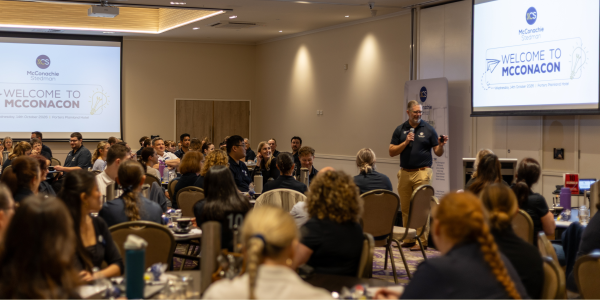
On 14 October 2026, our McConachie Stedman teams travelled from our Toowoomba, Clayfield, Redcliffe and Kingaroy offices to the Porters Plainland Hotel function room for McConacon, our annual team conference.

It’s been a while since you last had a salary increase, so the amount you could borrow as a home loan is the same as last time you checked, right?

While it’s important for older people to follow a financial plan, it’s equally important – if not more-so – for younger people to develop a strategy for their future.

In this month's market snapshot, we take a glimpse at what the market has been up to and what the key developments were for August 2026.

In this month's market snapshot, we take a glimpse at what the market has been up to and what the key developments were for July 2026.

Being your own boss offers flexibility, but it can also mean dealing with uneven income. Learn how contractors and freelancers can budget more effectively, prepare for tax obligations and super contributions, and build financial buffers to help smooth out the ups and downs of self-employment.

Protecting your retirement savings starts with knowing the red flags.

In keeping with ASIC’s enduring financial-reporting focus areas, the commission will monitor financial-report preparers’ major judgements.

The Australian Charities and Not-for-profits Commission has released new guidance to help charities wanting to invest cash.